

Exterior Walls in Old Houses: Know Your Walls Before you Reno
In order to make informed decisions about any home renovations you take on, you will need to know what’s in your walls. From hanging a picture on the wall to adding insulation, knowing how the exterior walls of your home are constructed will determine everything you do. So let’s talk about the main types of exterior walls in old houses.
Why Knowing your Wall Construction Matters
Recently, every time I’ve sat down to write about a new topic, I find myself reiterating this simple first step: determine how your walls are constructed.

In old houses this is particularly important. We are working with something that was constructed a hundred or more years ago. Adding modern, non-breathable products could be encouraging condensation and moisture accumulation, which can cause mold, wood rot, brick spalling and pest infestations.
Demolishing a wall without knowing it’s function could compromise the house’s structural integrity.
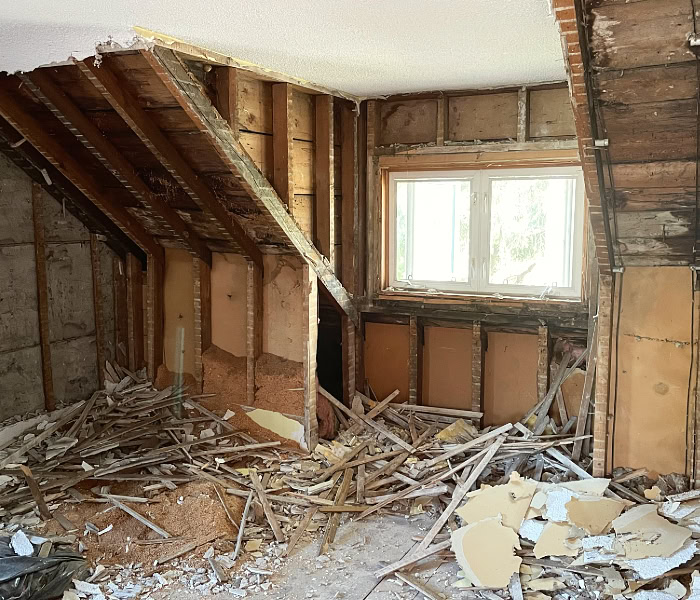
Even fastening something to an old wall could be difficult when you don’t know what lies behind the drywall or lath and plaster. You might be searching for a stud that isn’t even there!
So consider this your sign to learn more about the walls of your old house.
The Difference Between Interior, Exterior and Party Walls
Let’s start by determining the difference between interior, exterior and party walls because they are all constructed a bit differently.
Interior Walls
The walls that separate rooms from one another are called interior walls. In North America, interior walls are most commonly constructed using wood framing, usually 2x4s. Vertical studs are spaced 16” on center, but in older homes, there may be more variation in stud sizes and placement.
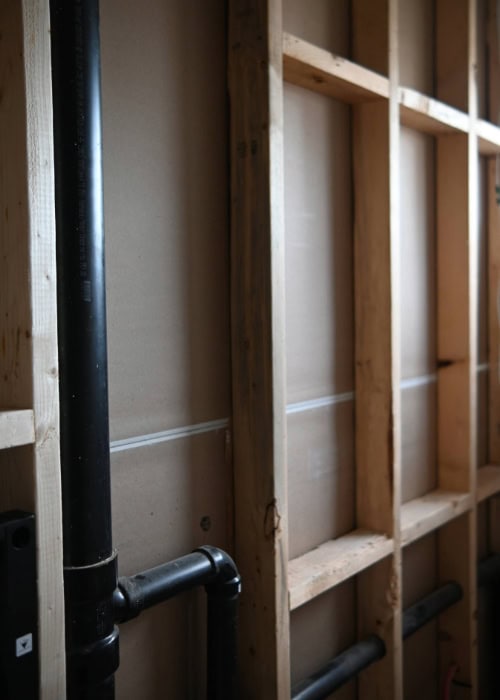
Interior walls are the most likely to contain plumbing water lines and drain pipes. This is because placing plumbing in exterior walls can cause pipes to freeze. Both interior and exterior walls contain electrical cables.
Exterior Walls
The walls that make up the perimeter of the house are called exterior walls. These are the walls that separate the inside environment from the outside. Most exterior walls are structural, built to keep the house standing.
Effective exterior walls keep water out and optimal temperatures in. However, exterior walls of older homes don’t always do a very good job of this.
Party Walls
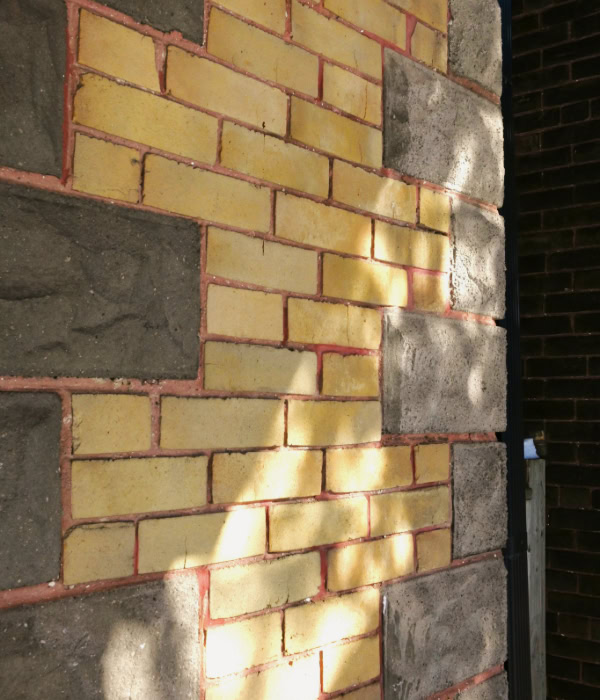
If you live in a house like a duplex or a semi-detached, you might also have something called a party wall. Party walls are shared walls that separate you from your neighbor. These walls are often made of concrete or masonry, which is needed as a fire protection between the adjoining homes.
Types of Exterior Walls in Old Houses
How can you tell what’s in the walls of your old home? Unless you are opening up your walls as part of your renovations, you might need to look for some clues.
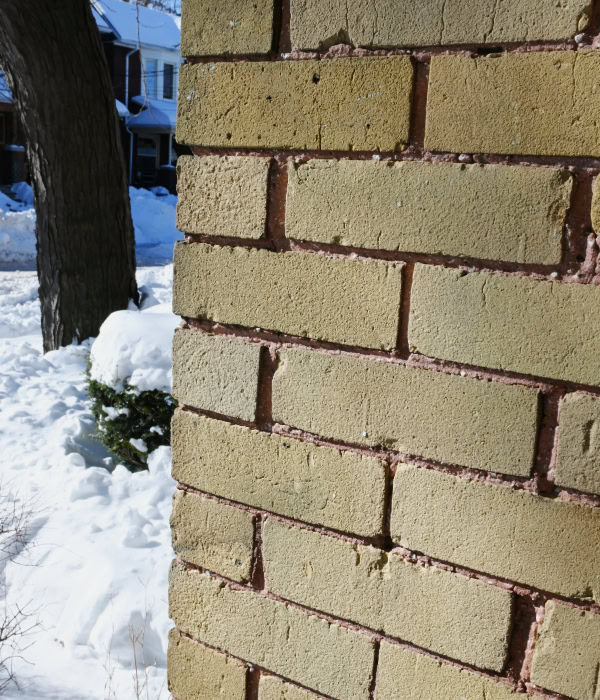
In some cases, the answer is as simple as looking at the exterior material. A brick house, for example, is obviously made of brick—but is it solid masonry or just a veneer? Other times, you’ll need to dig a little deeper, searching for clues in wall thickness, brick patterns, or even the sound of a tap on the surface.
Here’s how to identify the most common types of exterior walls in old North American houses.
Solid Brick (Structural Brick)
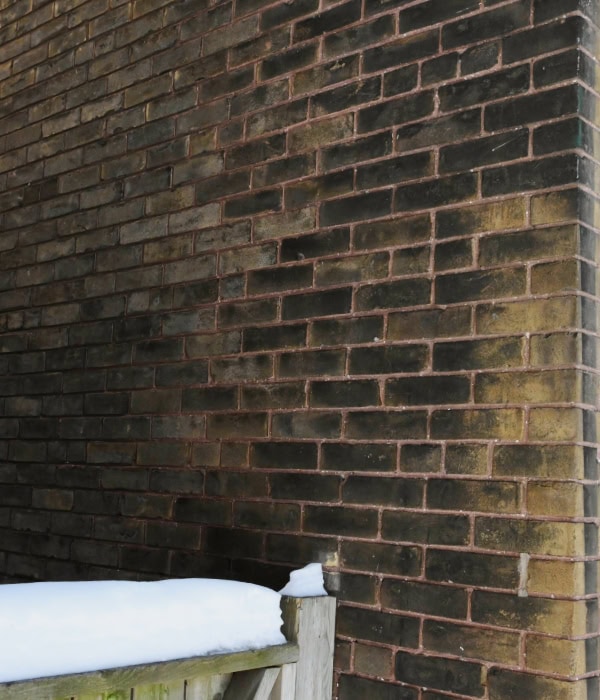
Brick houses were common in the 1900s as a durable and fire-resistant way to build a home. Walls were made up of two, or even three layers (or wythes) of horizontal, running bond laid brick that interlocked together. These walls are load-bearing and lack an air cavity, making them prone to moisture issues if improperly retrofitted.
How to Identify:
Look at the brick pattern, checking for alternating headers (short ends) and stretchers (long sides). It was common for the mason to turn a brick inward every few courses to tie the wythes of brick together. This was sometimes done as infrequently as every 6th row, so check carefully as it can be hard to spot.
Brick Veneer with Wood Frame
By the early 20th century, brick veneer construction became common. These homes have a wood-framed structure with a single layer of brick on the exterior, separated by an air gap. The brick serves as a decorative and protective cladding.
How to Identify:
Look at the brick pattern. Only stretchers (long sides) visible in a running bond indicate a veneer. At doorways or windows, if the brick is only one layer thick (about 4 inches) it is a veneer. The presence of weep holes, or small gaps between bricks at the bottom for drainage, are also indicative of brick veneer.
Wood Frame with Clapboard, Shingles, or Siding
Many older homes, particularly Victorian and Craftsman-style houses, were built with wood framing and wooden exterior cladding, such as clapboard, board-and-batten, or wood shingles. These walls often have little to no insulation.

How to Identify:
Knock on an exterior wall—it should sound hollow compared to masonry. You can also drill a hole to check for resistance, or look inside an unfinished attic to see if you can see wood framing.
Concrete Block
In the early 20th century, hollow concrete block walls gained popularity, especially in Mid-Century Modern homes. These walls often have an air cavity but little insulation. Like brick homes, this can make them difficult to insulate and prone to condensation if not retrofitted correctly.
How to Identify:
Look in an unfinished basement or crawl space—if you see concrete blocks, the exterior walls may be the same material. To confirm, drill a hole in an above grade exterior wall to check if the drill goes through into a cavity (framed) or if it is hard to drill (concrete).
Final Thoughts
Before making any changes to your old house—whether it’s hanging decor, demolishing, repairing damage, or upgrading for energy efficiency—it’s crucial to understand what kind of exterior walls you’re working with. Each wall type has unique characteristics that affect durability, moisture management, and renovation strategies. By identifying the clues in your home’s construction, you can make informed decisions that preserve its integrity while improving comfort and efficiency.
Take the time to assess your walls before you renovate and research strategies for your particular wall type. It might save you from making costly mistakes down the road.


